
Key Insights for a Successful Move to Maryland

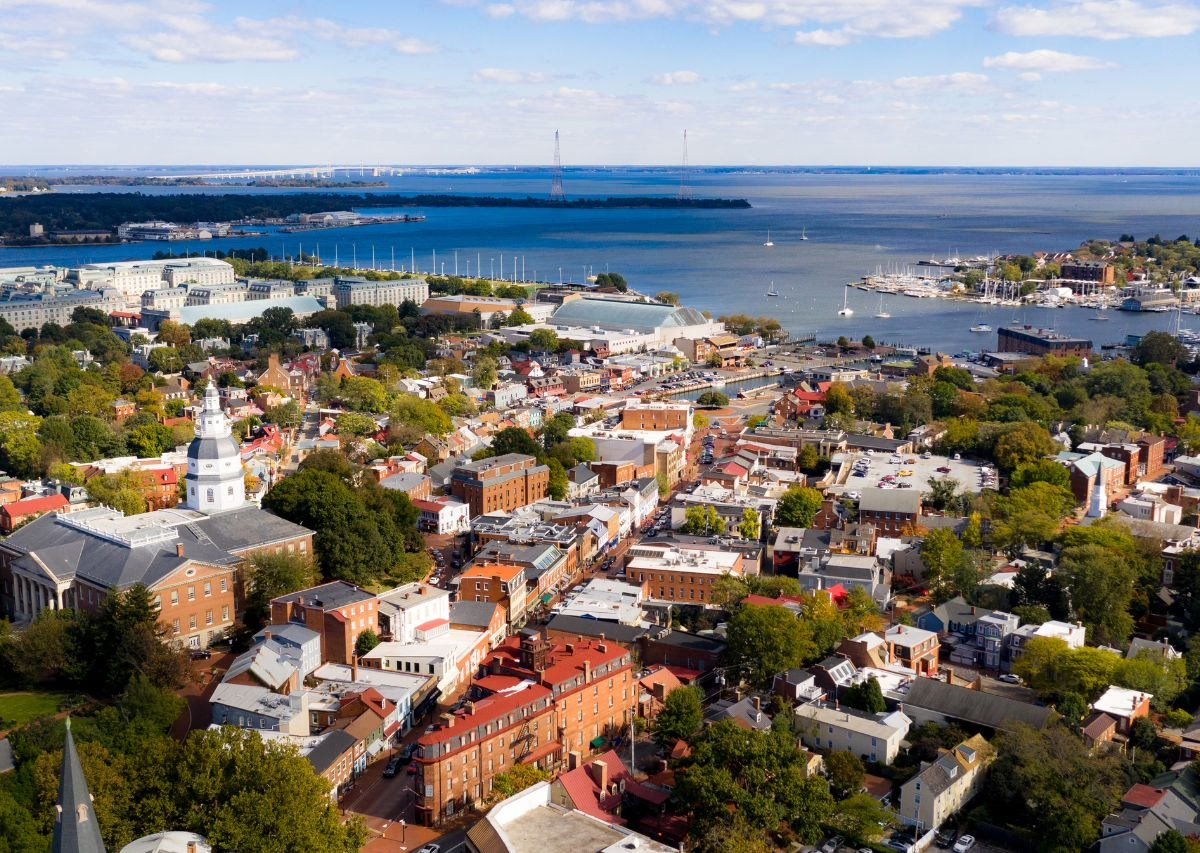
Maryland represents a grounded shift toward a lifestyle defined by deep historical roots, coastal beauty, and economic stability. Known as the “Old Line State” and “Little America,” Maryland is characterized by its incredibly diverse geography, stretching from the sandy Atlantic beaches of Ocean City to the lush, rolling hills of the Piedmont and the rugged Appalachian Mountains in the west. As of early 2026, the state is home to approximately 6.2 million residents, making it a major population anchor in the Mid-Atlantic. When you organize a move to Maryland, you are entering a region that successfully balances large-scale federal innovation with an intense focus on maritime heritage and community-focused living. Natural landmarks like the Chesapeake Bay are central to the state’s global identity and culinary fame.
Whether you are relocating your household or coordinating a business transition, having access to professional office relocation services can make the process significantly more efficient, especially for companies expanding into Maryland’s growing tech and government sectors.
The state typically experiences a humid subtropical climate, offering four distinct seasons that are particularly pronounced across its varying elevations. This weather pattern has made Maryland a premier destination for those who value both seaside summers and crisp, colorful autumns. Maryland’s primary claim to fame is its legendary blue crabs and the historic Port of Baltimore, but for residents, the true appeal lies in its proximity to the nation’s capital and its consistently high ranking for household income and educational attainment. From the metropolitan energy of Silver Spring to the quiet, historic brick streets of Annapolis, Maryland offers a grounded sense of community and a robust economic foundation. Navigating a successful physical transition to this diverse region requires local knowledge and clear logistics, ensuring you are settled in without unnecessary complications.
Organize Your Maryland Relocation with Pack it Up Moving
A move to Maryland, whether you are heading to the bustling tech corridors of Montgomery County or the scenic waterfronts of the Eastern Shore, requires advanced logistics and supportive handling to manage the unique geography and variable weather patterns. Pack it Up Moving specializes in clear planning to get your property settled safely into your new Maryland home.
Get Your Customized Moving Estimate
Maryland Weather and Climate: A Strategic Breakdown
Understanding the state’s seasonal shifts is essential for organizing a physical transition. The climate dictates the rhythm of daily life and moving logistics. If you plan a move to Maryland, you must account for these variations during the relocation process to ensure a smooth arrival.
Spring (March – May): Spring is a time of vibrant transition. While the coastal areas begin to warm, the western mountains can still see a stray snowfall. This is an excellent time for a move, though you must be prepared for the occasional April shower.
Summer (June – August): Maryland summers are famously hot and humid, especially in the central and southern regions. High temperatures frequently exceed 90°F. If moving in summer, start very early in the day to avoid the peak afternoon humidity.
Autumn (September – November): Widely considered the best time for a move. The humidity disappears, the foliage along the Appalachian Trail is world-class, and the weather is generally stable, cool, and dry.
Winter (December – February): Winters are cold, with snowfall varying significantly. Central Maryland might see moderate snow, while Western Maryland experiences heavy accumulations. While moving rates are lower, winter moves require advanced vehicle preparation to manage ice.
Best Time to Move: The most predictable and comfortable weather for moving occurs in late September and October. During this window, you avoid the sweltering humidity of the Chesapeake summer and the unpredictable winter storms that can impact the I-95 corridor.
Cost of Living and Housing in Maryland
A major financial consideration for anyone deciding to move to Maryland is the state’s stable yet premium housing market. While Maryland is considered a high-value state, it offers a diverse range of price points that align with localized salaries and professional opportunities.
The cost of housing is the most significant localized variable. As of early 2026, the median home value in Maryland is approximately $415,000, which is slightly above the national average but provides excellent long-term value. However, this is largely driven by high demand in the “B-W Corridor” (Baltimore-Washington). In counties like Howard or Montgomery, median prices often exceed $550,000. Conversely, more rural areas on the Eastern Shore or in Western Maryland offer much more approachable entries, with median values often between $250,000 and $350,000.
Rental trends follow a similar pattern. The average rent for a two-bedroom apartment in Maryland is roughly $1,850. In comparison, a similar apartment in Bethesda might command $2,800, while parts of Salisbury average around $1,400. Residents also benefit from a state income tax and localized “piggyback” taxes that vary by county. Overall, Maryland offers a grounded cost of living that provides high value, especially when factoring in the high localized salaries found in the federal, medical, and cybersecurity sectors.
Economy and Job Market in Maryland
Maryland’s economy is resilient, localized, and leads the nation in several high-growth sectors. If you are a professional making a move to Maryland for career advancement, you will likely find yourself in one of these three dominant industries:
Federal Government and Defense: Because of its proximity to D.C., Maryland is home to massive federal agencies. Major employers include the Social Security Administration, NIH, and the NSA. This supports an advanced ecosystem of defense contractors and civil service roles.
Healthcare and Biotechnology: Centered around the world-renowned Johns Hopkins University and the University of Maryland Medical System, this sector is a top-tier employer. The “I-270 Tech Corridor” is also a global leader in vaccine research and genetic testing.
Cybersecurity and Intelligence: With Fort Meade and the U.S. Cyber Command located in-state, Maryland has the highest concentration of cybersecurity professionals in the world, creating a massive demand for technical and intelligence talent.
For companies relocating employees or establishing new branches in these sectors, reliable office setup services for businesses relocating to Maryland help ensure a smooth transition from the initial move to a fully operational workspace.
Major Employers and Commutes: Beyond the government, major employers include Lockheed Martin and Marriott International. Commute trends vary by region. Traffic congestion is significant in the D.C. and Baltimore suburbs, where average commutes often exceed 35 minutes. However, the state has invested in the MARC train and the expanding Purple Line light rail to help alleviate these localized bottlenecks.
Getting Around: Maryland’s Transportation Infrastructure
Transportation in Maryland is diverse, reflecting the state’s geography from urban centers to maritime valleys. Personal vehicles remain the dominant mode of travel, but public transit is robust in specific regions. When you move to Maryland, your daily logistics will shift based on your location.
BWI Marshall Airport: This is one of the busiest and most efficient hubs in the Mid-Atlantic. It offers non-stop service to major global destinations and serves as a major base for Southwest Airlines, providing affordable domestic travel.
The MARC Train: This commuter rail system connects Baltimore and D.C., allowing professionals to live in more affordable Maryland suburbs while working in the city centers. It is a vital link in the state’s transportation network.
Highway Infrastructure: I-95 is the primary artery, running north-south through the state’s heart. While well-maintained, it can experience localized bottlenecks during peak hours. The Bay Bridge is another critical link, connecting the mainland to the Eastern Shore.
Walkability: Certain localized areas like Annapolis, Downtown Frederick, and Baltimore’s Fells Point offer high walkability scores, allowing residents to complete daily tasks without a car.
Professional Moving Tips: Strategic Relocation
Organizing a move to Maryland requires specific planning, especially regarding the state’s unique geography and urban layouts. Clear logistics ensure your transition is supportive and organized.
Understand Long-Distance vs. Local: For moves under 100 miles, local moving services usually charge an hourly rate based on the crew size. For moves crossing state lines (interstate), quotes are typically based on the total weight of your items and the distance traveled.
Downsize Before You Pack: Space is at a premium in many historic Maryland homes, which may have smaller closets than modern builds. Before you leave, donate or sell items you haven’t used in the last year. This is a vital step to simplify the process.
Prepare for Humidity: If your items will be in a truck for several days during a Maryland summer, professional movers use advanced padding and stretch wrap to protect wood furniture from moisture and swelling.
Community Knowledge: Choose a moving company familiar with localized logistics, such as navigating the narrow streets of Baltimore’s rowhome neighborhoods or understanding the parking permit requirements in Montgomery County.
For homeowners who already have transportation arranged but need help with the heavy lifting, hiring professional loading and unloading services can significantly reduce physical strain while ensuring your belongings are handled safely.
Organize Your Transition with Pack it Up Moving
A move to Maryland is a big step forward for your career and family lifestyle. The Old Line State offers a supportive environment grounded in localized community and historical preservation. Organizing a successful relocation helps set a positive tone for your entire journey. At Pack it Up Moving, we understand the specific logistical steps needed to move your property safely over long distances and through variable weather patterns. We prioritize supportive, grounded physical labor and clear communication, allowing you to focus on settling into your new neighborhood rather than worrying about logistics.
Call Pack it Up Moving at 678 334 2601 or email office@packitupmoving.com today to organize your free moving estimate.
FAQ
It depends on the region. The D.C. suburbs are quite expensive, but Western Maryland and the Eastern Shore offer a cost of living closer to the national average.
October is ideal. You avoid the high humidity of summer and the potential for winter snow, while enjoying the best outdoor weather the state has to offer.
In most of the state, yes. While parts of Silver Spring and Baltimore are walkable and served by transit, a vehicle is necessary for most daily tasks.
Yes, Maryland has a progressive state income tax. Additionally, each county charges a local “piggyback” tax that is collected alongside the state return.
The market is competitive in tech hubs. Have your credit report, proof of income, and security deposit ready as soon as you find a localized neighborhood you like.